I have a love-hate relationship with AI.
I love the creative, time-saving things I can do by using super-intelligent technology intelligently. AI has made me a better teacher, advisor, and writer.
As an adjunct university professor, I was fortunate to train and experiment with generative artificial intelligence (GenAI) when ChatGPT brought large language models (LLMs) into the public’s attention in 2022. Our school’s academic leaders equipped us with top-tier tools and held monthly hands-on tutorials and workshops where faculty could test ideas and share classroom results.
“The school needed to make sure its teachers are smarter than their students.”
At a recent workshop, I showed my colleagues how I used AI tools to create teaching materials and activities for finance lessons for non-businesspeople. Teaching complex topics, such as analyzing financial statements, to students in a public relations Master’s program was a challenge. Many of my students dreaded this lesson, having chosen the field of strategic communication to avoid mathematics.
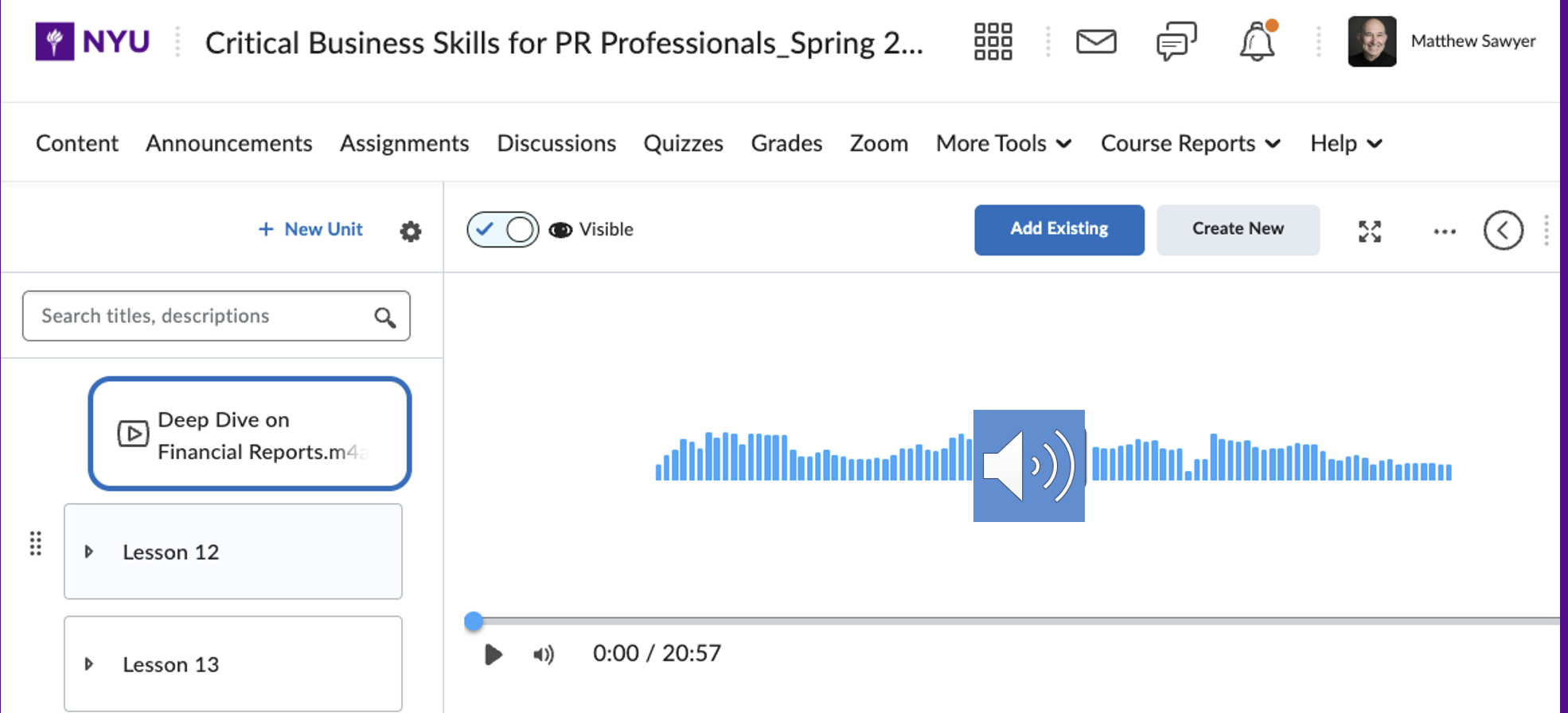
In a 20-minute online session, I demonstrated how I created case studies with Gemini, a non-fiction editor (Google’s GEM) that pulled from the AP Style Guide and APA citation rules, an interactive quiz based on my lesson, plus a podcast with two people discussing the functions of financial statements and what strategic communications professionals should know about them.
But I hate many things about the technology and how it’s threatening the lives and livelihoods of billions of people. I hate its negative impact on our planet, especially its data centers’ voracious appetite for energy and water. I hate the motives and carelessness of the Tech People selling business executives on AI’s potential to lower costs by reducing employees, which C-suite boardrooms call “headcount.”
As Cory Doctorow wrote in The Reverse Centaur’s Guide to Life After AI, “people who are sick to the back of their teeth of having AI jammed into their eyeballs by overcapitalized tech companies.”
These hateful feelings of frustration and despair needed a creative outlet. So, ironically, I turned to writing a song about using AI tools. It wasn’t that much of a leap, since writing has been my favorite way of communicating, from my time as a high school newspaper editor to publishing a nonfiction book in 2022. Well, maybe an Olympic jump, since I have little musical talent and get scolded by my wife for singing in the shower.
Here is the song. I’ve shared it with a few friends, and they thought it was fun and sounded good. I hope you like it, too.
My songwriting started when my former boss, and current buddy, sent me a song he wrote with Suno.ai. It wasn’t a great song in terms of memorable lyrics or music, but he had a lot of fun making it and sharing it with his friends. I signed up for Suno and started learning how to create songs with just an idea. It could be about anything: a birthday celebration, a dirty dog, or a new pair of shoes.
Next, I taught myself how to write lyrics. I got a bunch of books out of the library about songwriting. The book Writing Better Lyrics by Berklee School of Music professor Pat Pattison was especially helpful for learning the basic elements and frameworks of lyric writing. I learned how to build stories one verse at a time. Then add a chorus to reinforce a central theme. I also learned that songs often need bridges to connect sections of the piece.
Then I created an AI song-writing editor with Gemini, aptly called Gems. I utilized an online thesaurus and a rhyming dictionary while writing lyrics. I often asked my Gem to assess my lyrics based on the criteria I built into the tool. I iterated on the lyrics, each time critiqued by the AI and improved with my imagination and sense of humor.
After a couple of hours, I had four verses and a chorus that I thought were good enough to set to music. Gemini gave me directions to tell Suno for the music style, the tempo in beats per minute, and the background instruments. For this song, I chose a solo male vocalist playing an acoustic guitar, midtempo, in an Americana style.